
Room: Amazon
Date: Friday, 22 May 2026
Time: 11:30 - 12:45 CEST
Session code 2DO.5
BECCS technologies and forest carbon dynamics
Cascading Wood into BECCS Ensures Continuous and Enduring Temperature reduction
Short Introductive summary
Limiting global warming to 1.5 °C requires global net-zero CO2 emissions by mid-century, demanding deep emission cuts and large-scale carbon dioxide removal. Bioenergy with carbon capture and storage (BECCS) offers a promising route to deliver renewable energy with durable CO2 removal, yet trade-offs remain between conserving ecosystem carbon and harvesting biomass. Further, conventional life cycle assessment (LCA) often overlooks temporal carbon dynamics, emission timing, and progressive technology deployment. This study applies a multi-scale dynamic LCA linking time-explicit carbon accounting of BECCS value chains with forest dynamics. Part One quantifies the climate impact of a single flow of sawmill residues used for bioenergy or cascaded via particleboard before bioenergy, with and without CCS, across independent decarbonisation scenarios. Part Two extends the analysis to continuous annual residue flows with progressive CCS deployment, time-dependant forest carbon dynamics, and evolving economy-wide decarbonisation, and compares outcomes with a no-harvest scenario maximising ecosystem carbon storage.
Presenter
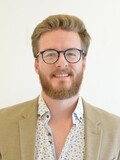
George BISHOP
University of Galway, IRELAND
Presenter's biography
Dr. George Bishop is an environmental scientist at the University of Galway. His primary research pursuits revolve around using forward-looking life cycle assessment (LCA) to explore and understand the complex systems transformation necessary to achieve Net Zero and Bioeconomy ambitions.
Biographies and Short introductive summaries are supplied directly by presenters and are published here unedited
Co-authors:
C. Duffy, University of Galway, IRELAND
G. Berndes, Chalmers University of Technology, Göteborg, SWEDEN
M. Brandão, KTH Royal Institute of Technology, Stockholm, SWEDEN
A. Cowie, New South Wales Department of Primary Industries and Regional Development, Armidale, AUSTRALIA
J.R. Healey, Bangor University, UNITED KINGDOM
C Hennig, DBFZ, Leipzig, GERMANY
K. Koponen, VTT Technical Research Centre of Finland, Espoo, FINLAND
J. Gaffey, Circular Bioeconomy Research Group, Tralee, IRELAND
D. Styles, University of Galway, IRELAND
Session reference: 2DO.5.3