
Room: Poster Area
Date: Wednesday, 20 May 2026
Time: 15:00 - 16:00 CEST
Session code 5BV.6
Biogenic hydrogen
Hydrogen-Rich Gas Production by the Reforming of Slow Pyrolysis Volatiles: Energy and Mass Balance
Short Introductive summary
Pyrolysis volatiles are one of the main products of pyrolysis, including condensable and non-condensable components. Reforming pyrolysis volatiles is an interesting method to increase hydrogen-rich gas production, which can be used to produce other products, such as bio-methanol and biomethane. The two-stage reforming process has some advantages compared to other thermochemical methods, highlighting its potential in the coming years. The main aim of this study is to perform an energy and mass balance of this process. Woody biomass is selected for the feedstock of the slow pyrolysis process, and the slow pyrolysis volatiles composition is used as a feedstock of the reforming process. Reforming at 800 °C is modelled to investigate the effective factors in this process. The obtained results showed that reforming pyrolysis volatiles increases gas components by more than 100% in some conditions compared to the pyrolysis process. Also, results demonstrated the beneficial impacts of using steam as a reforming agent to increase hydrogen-rich gas yield at a specific temperature.
Presenter
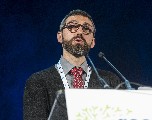
Matteo PRUSSI
Politecnico di Torino, DENERG Dpt., ITALY
Presenter's biography
I am an industrial engineer, with a scientific background in renewable energy conversion technologies. I have been working in alternative fuels sector for almost 15 years. I am Associate Professor at the Energy Dept. of the Polytechnic University of Turin (POLITO).
Biographies and Short introductive summaries are supplied directly by presenters and are published here unedited
Co-authors:
M. Prussi, Politecnico di Torino, ITALY
D. Chiaramonti, Politecnico di Torino, ITALY
Session reference: 5BV.6.4