
Room: Poster Area
Date: Tuesday, 19 May 2026
Time: 16:15 - 17:15 CEST
Session code 2AV.3
Circular bioeconomy and environmental performance: innovations and assessments
Sustainable and Circular Textiles: The Environmental Performance of Natural, Semi-Synthetic and Recycled Bio-Based Fibres
Short Introductive summary
The transition to sustainable fibres in the textile industry requires an understanding of trade-offs between bio-based, recycled, and fossil-based materials. The presented work applied screening life cycle assessments to evaluate the environmental performance of natural fibres (cotton, hemp, linen), semi-synthetic fibres (viscose, lyocell), and recycled bio-based fibres, using fossil-based polyester as a reference. Preliminary results show that cotton has the highest water, land use, and phosphate footprint, while hemp, linen, and regenerated cellulose fibres (a type of recycled bio-based fibres) perform more favourably. Substituting virgin cotton with recycled or semi-synthetic bio-based fibres reduces most environmental footprints, although the carbon footprint remains similar due to the energy required to produce them. Our work highlights the potential of European bio-based and recycled fibres to reduce fossil resource consumption and to support a circular textile transition within the EU bioeconomy.
Presenter
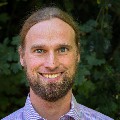
Nils RETTENMAIER
IFEU - Institute for Energy and Environmental Research Heidelberg, Biomass and Food, GERMANY
Presenter's biography
Nils Rettenmaier is Head of the Department of Biomass & Food at IFEU – Institute for Energy and Environmental Research Heidelberg. He joined IFEU in 2006 and his main working fields are life cycle assessments (LCAs) of biomass-based systems, biomass resource assessments and sustainability criteria.
Biographies and Short introductive summaries are supplied directly by presenters and are published here unedited
Co-authors:
S. Gaertner, ifeu, Heidelberg, GERMANY
N. Rettenmaier, ifeu, Heidelberg, GERMANY
Session reference: 2AV.3.11