
Room: Poster Area
Date: Thursday, 21 May 2026
Time: 11:30 - 12:45 CEST
Session code 5CV.3
Hydrothermal processing
Thermochemical Conversion of Sugarcane Bagasse: A Comparative Study of Catalytic Hydrothermal Liquefaction and Pyrolysis
Short Introductive summary
The increasing commitment of countries to reach net-zero emissions in the next few decades are pushing for research and development of technologies to provide sustainable fuels and chemicals. Brazil has one of the world’s largest agroindustries of sugarcane, which produces sugar and ethanol. The sugarcane bagasse is commonly used in boilers for the production of combined heat and power (CHP), but there are new thermochemical technologies like pyrolysis and HTL that might be used to produce higher-value products. Despite the potential of pyrolysis and HTL, recent work has revealed that HTL of Brazilian sugarcane bagasse, even under a wide range of conditions (300–350 °C) and residence time (0–30 min), result in low bio-oil yields (17-30wt%) and have a predominance of oxygenated compounds. On the other hand, pyrolysis of sugarcane bagasse produces yields of 61wt%. However, the oils have high content of ester, ether, carboxylic acid, ketone, and alcohol functional groups, lowering the quality of the bio-oil. The novelty of this work lies in the large-scale pyrolysis experiments, focusing on process integration through the valorization of syngas, and novel homogeneous HTL catalysts
Presenter
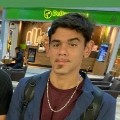
Ericles VALE NASCIMENTO
FEQ/UNICAMP, BRAZIL
Presenter's biography
Doctor's degree in development at FEQ/UNICAMP (Brazil). Actually I am working with sugarcane bagasse conversion process for biocombustibles and syngas production, turning iron ore reduction more sustainable using sugarcane bagasse and applying LCA and ML tools onto these process.
Biographies and Short introductive summaries are supplied directly by presenters and are published here unedited
Co-authors:
L. Cutz, Delft University of Technology, THE NETHERLANDS
G. Paim Valença, FEQ/UNICAMP, Campinas, BRAZIL
T Teixeira Franco, FEQ/UNICAMP, Campinas, BRAZIL
Session reference: 5CV.3.15