
Room: Amazon
Date: Thursday, 21 May 2026
Time: 11:30 - 12:45 CEST
Session code 2CO.5
From sustainability assessments to social dimensions of biomass and bioenergy
Social Perception and Socio-Environmental Impact of BECCS Implementation in São Paulo State, Brazil
Short Introductive summary
Bioenergy with Carbon Capture and Storage (BECCS) presents Brazil with a strategic opportunity to integrate energy generation and carbon removal within the sugar and energy sector. This study, part of the FAPESP-funded CCD BECCS Centre, examines the social perception and socio-environmental impacts of implementing a pioneering onshore BECCS pilot plant in São Paulo State. It integrates social psychology, sociology, communication, and governance studies to identify factors influencing public understanding, trust, and engagement. The research combines surveys, interviews, discourse, and network analyses across multiple subprojects on governance, risk perception, legitimacy, media, and community acceptance. Preliminary results indicate low public awareness of BECCS but high institutional trust, highlighting the need for inclusive communication and participatory governance. The project contributes to the development of the first integrated framework for assessing the social feasibility of BECCS in Latin America, supporting just and transparent energy transitions.
Presenter
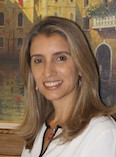
Karen MASCARENHAS
RCGI - Research Centre for Greenhouse Gas Innovation at USP, Human Resources & Institutional Communication Dpt., BRAZIL
Presenter's biography
Director Human Resources & Institutional Communication at Research Centre for Greenhouse Gas Innovation, researcher in Public Perception, Leadership, Social Licence to Operate, SDGs areas. Prof Adm Post-grad at FGV, PhD and MSc Social Psychology with a period of 1 year at Imperial College.
Biographies and Short introductive summaries are supplied directly by presenters and are published here unedited
Co-authors:
D. Perecin, University of São Paulo, BRAZIL
S.T. Coelho, Research Centre for Greenhouse Gas Innovation at University of São Paulo, BRAZIL
Session reference: 2CO.5.3