
Room: Poster Area
Date: Wednesday, 20 May 2026
Time: 09:00 - 10:00 CEST
Session code 2BV.1
Carbon accounting for the bioeconomy
Climate Impact of Residential Biomass including "Black Carbon-Emissions" Heating Systems Based on Practical Emission Measurements at the Technology and Support Center (TFZ)
Short Introductive summary
This study evaluates greenhouse gas (GHG) and particulate emissions from residential biomass heating systems based on extensive measurements at the TFZ in Straubing, Germany. It covers logwood stoves, pellet stoves, pellet boilers, and wood chip boilers under steady and realistic operating conditions including cold startup. GHG calculations include methane, nitrous oxide, VOCs, fossil upstream emissions, and black carbon (BC), excluding direct CO2 from combustion. Logwood stoves have the highest emissions (~50 g CO2-eq/kWh), mainly from BC and N2O. Pellet stoves and boilers emit less (~23 and 14 g CO2-eq/kWh). BC emissions are critical in older systems and with lower fuel quality but reduced by modern automatic feeding technologies. Wood chip boilers fall between pellet boilers and logwood stoves. Compared to fossil systems, biomass heating reduces GHG emissions by 89–96%. Over 100 years, biomass outperforms heat pumps, though BC reduces this advantage over 20 years. Mandatory buffer storage and technical optimizations can further cut emissions.
Presenter
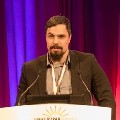
Robert MACK
Technology and Support Centre of Renewable Raw Materials, Solid Biofuels Dpt., GERMANY
Presenter's biography
Robert Mack completed his Master degree in Environmental Engineer-ing at the University of applied sciences Amberg-Weiden in 2014. He now works as a researcher in the department of Solid Biofuels at the Technology and Support Centre.
Biographies and Short introductive summaries are supplied directly by presenters and are published here unedited
Co-authors:
C. Schoen, Technology and Support Centre of Renewable Raw Materials, Straubing, GERMANY
D. Kuptz, Technology and Support Centre of Renewable Raw Materials, Straubing, GERMANY
Session reference: 2BV.1.12